What Is a Heart-Healthy Dietary Pattern
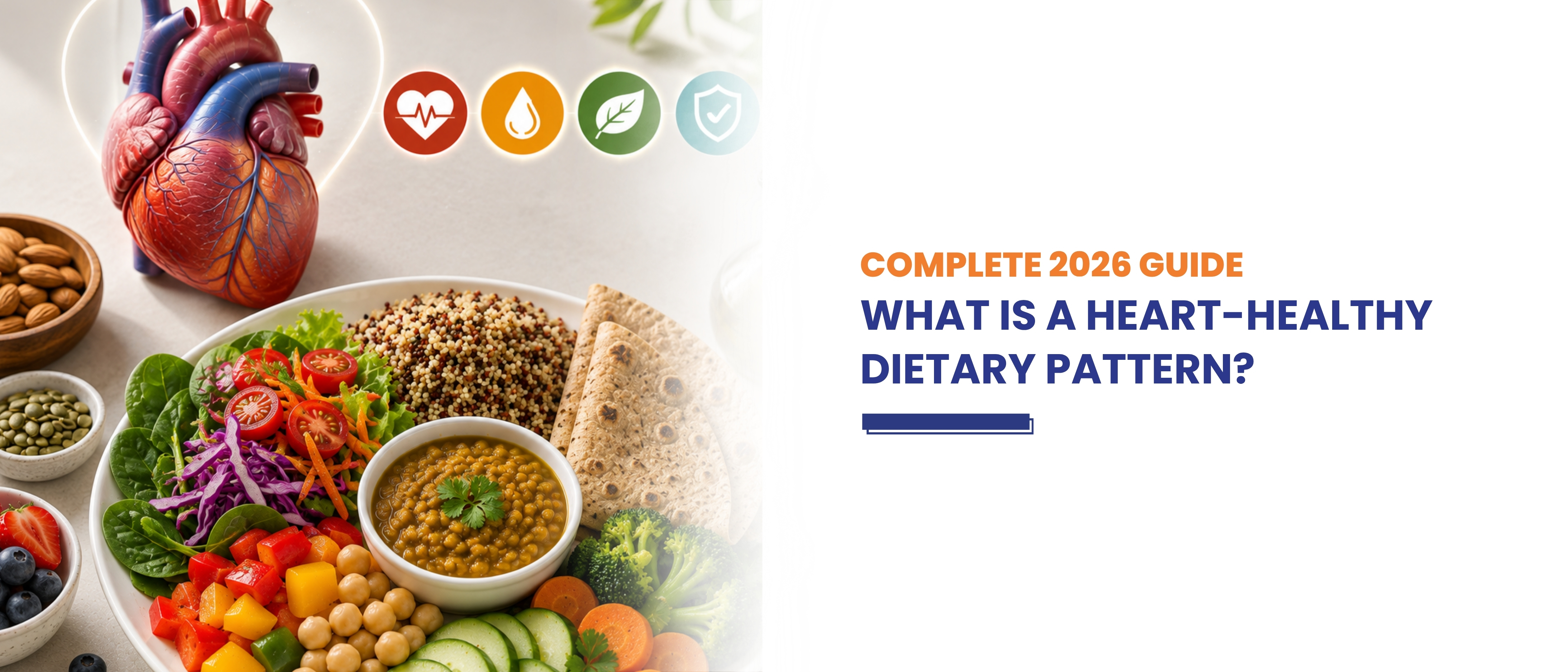
What Is a Heart-Healthy Dietary Pattern? Complete 2026 Guide
A busy morning may begin with tea and biscuits, lunch may arrive late, and dinner may depend on what is convenient after work. For many families, this pattern feels completely normal. However, what we eat regularly can influence cholesterol, blood pressure, blood sugar, body weight, and overall heart health.
A heart-healthy dietary pattern does not require expensive foods or a complicated diet plan. It is about building everyday meals around vegetables, fruits, whole grains, pulses, healthy proteins, and appropriate portions. Small, sustainable changes can make healthy eating easier for the entire family.
A heart-healthy dietary pattern focuses on vegetables, fruits, whole grains, pulses, nuts, seeds, and suitable protein sources. It limits excess salt, added sugar, saturated fat, trans fat, and highly processed foods. The goal is not one perfect meal, but making healthier choices consistently over time.
Understanding a Heart-Healthy Dietary Pattern
A heart-healthy diet is not a single food list or a temporary diet.
It is an overall way of eating that supports cardiovascular and metabolic health.
Think about your diet as a pattern rather than individual foods. Eating one salad cannot compensate for consistently eating foods high in salt, sugar, or unhealthy fats.
Similarly, enjoying an occasional sweet does not automatically make an otherwise balanced diet unhealthy.
What matters most is what you eat regularly.
A heart-friendly dietary pattern generally includes more minimally processed foods and fewer foods high in sodium, added sugars, and unhealthy fats.
Why Heart-Healthy Eating Matters
Heart disease develops due to several factors. Some cannot be changed, such as age and family history.
Others can be influenced through everyday habits.
An unhealthy dietary pattern can contribute to:
- High blood pressure
- High LDL cholesterol
- Type 2 diabetes
- Excess body weight
- Poor metabolic health
These conditions can increase cardiovascular risk over time.
Urban routines can make healthy eating challenging. Long working hours, frequent restaurant meals, food delivery, irregular meal timings, and limited physical activity can gradually influence health.
The aim is not perfection. Consistency matters more.
What Foods Belong in a Heart-Healthy Diet?
A heart-friendly plate can include familiar foods already found in many Indian kitchens.
Vegetables
Include different vegetables throughout the week.
Examples include:
- Spinach and other leafy greens
- Beans
- Carrots
- Tomatoes
- Capsicum
- Gourds
- Cauliflower
- Cabbage
Try to include vegetables in different colors. Variety provides different nutrients and makes meals more interesting.
Fruits
Whole fruits can be included as part of a balanced dietary pattern.
Examples include:
- Apples
- Oranges
- Guava
- Papaya
- Pomegranate
- Bananas
- Seasonal fruits
Whole fruit is generally preferable to fruit juice because it retains fiber.
People with diabetes or other medical conditions should follow personalized dietary advice.
Whole Grains
Choose less refined grains when practical.
Options may include:
- Whole wheat
- Oats
- Brown rice
- Millets
- Barley
Whole grains provide fiber and can support digestive and metabolic health.
Pulses and Legumes
Traditional Indian diets already provide several heart-friendly protein sources.
These include:
- Dal
- Rajma
- Chana
- Green gram
- Black gram
- Other beans and lentils
They provide plant protein and fiber and can form an important part of regular meals.
Nuts and Seeds
Small portions of unsalted nuts and seeds can provide healthy fats.
Examples include:
- Almonds
- Walnuts
- Groundnuts
- Flaxseeds
- Chia seeds
They are nutritious but also calorie-dense, so portion size matters.
Healthy Protein Sources
Protein choices can include:
- Pulses and legumes
- Fish
- Eggs
- Lean poultry
- Low-fat dairy products
People following vegetarian diets can combine pulses, legumes, dairy, nuts, seeds, and other suitable protein sources.
Individual needs vary according to age, activity, kidney function, and other health conditions.
Which Fats Are Better for the Heart?
Not all dietary fats affect health in the same way.
Unsaturated fats are generally preferred over foods high in saturated or trans fats.
Sources of unsaturated fats can include:
- Nuts
- Seeds
- Fish
- Certain vegetable oils
Foods containing larger amounts of saturated fat should be consumed thoughtfully.
These may include:
- Butter
- Ghee
- Fatty meats
- Full-fat dairy products
- Some bakery products
This does not necessarily mean every source must be eliminated.
The overall amount, frequency, and dietary pattern matter.
Trans fats, especially those found in some commercially fried and highly processed foods, should be avoided or kept as low as possible.
Why Salt Deserves Attention
Salt is an important consideration for heart health because excess sodium intake can contribute to high blood pressure.
Salt does not come only from what you add while cooking.
Hidden sodium may be present in:
- Packaged snacks
- Pickles
- Papad
- Instant noodles
- Sauces
- Processed meats
- Ready-to-eat meals
- Restaurant and fast foods
Taste buds can gradually adapt to less salt.
Using herbs, spices, lemon, garlic, ginger, and other flavorings can make meals enjoyable without relying heavily on salt.
People with heart, kidney, or blood pressure conditions may require specific sodium advice from their healthcare team.
What About Sugar?
Frequent consumption of foods and drinks high in added sugar can contribute to excess calorie intake and metabolic problems.
Common sources include:
- Soft drinks
- Sweetened beverages
- Packaged juices
- Sweets
- Cakes
- Biscuits
- Desserts
Sugar can also appear in foods that do not taste extremely sweet.
Reading food labels can help identify added sugars in packaged products.
Water is usually the simplest choice for everyday hydration unless a doctor has advised fluid restrictions.
Foods to Limit for Better Heart Health
You do not necessarily need to label foods as completely "good" or "bad."
Instead, pay attention to how frequently certain foods appear in your diet.
Consider limiting:
- Deep-fried foods
- Highly processed snacks
- Foods high in salt
- Sugary drinks
- Excess sweets and desserts
- Processed meats
- Foods containing trans fats
- Frequent large restaurant meals
A heart-healthy pattern should still be practical and enjoyable enough to maintain over the long term.
What Should a Heart-Healthy Plate Look Like?
A simple plate method can make meal planning easier.
Aim to make vegetables a substantial part of the meal.
The remaining portion can include suitable amounts of:
- Whole grains or other carbohydrate sources
- Protein-rich foods such as dal, beans, fish, eggs, or lean meat
Add fruit, curd, or other foods according to individual nutritional needs.
Portion size remains important, even when the food itself is nutritious.
A dietitian can help personalize portions for people with diabetes, kidney disease, heart conditions, or specific weight goals.
Does Heart-Healthy Eating Mean Giving Up Indian Food?
No.
A heart-healthy diet can comfortably include Indian food.
The difference often comes from preparation methods, portions, and frequency.
For example:
- Choose grilled or steamed foods more often than deep-fried options
- Include vegetables for lunch and dinner
- Use whole grains where practical
- Include dal or legumes regularly
- Reduce excess salt in cooking
- Keep sweets and fried snacks occasional
- Be mindful of cooking oil quantities
Healthy eating does not require abandoning familiar foods or cultural preferences.
Healthy Eating When Dining Out
Eating outside is part of modern life. It does not have to completely disrupt a heart-friendly eating pattern.
When possible:
- Choose grilled, steamed, roasted, or lightly cooked dishes
- Include vegetables
- Avoid automatically adding extra salt
- Limit very creamy or deep-fried dishes
- Choose water instead of sugary beverages
- Be mindful of large portions
One restaurant meal is unlikely to determine your heart health. Your regular dietary pattern matters more.
Don't Forget Physical Activity and Lifestyle
Diet is only one part of cardiovascular health.
Heart health also benefits from:
- Regular physical activity
- Adequate sleep
- Stress management
- Avoiding tobacco
- Maintaining a healthy weight
- Monitoring blood pressure
- Managing diabetes and cholesterol
- Regular health check-ups
These habits work together rather than independently.
CH Expertise and Approach
At Chinmaya Hrudayalaya, heart care focuses on prevention, early risk assessment, and clear patient education. Our team helps patients understand how nutrition, lifestyle, and medical factors work together to support cardiovascular health.
When to Speak with a Doctor or Dietitian
Consider professional guidance if:
- You have high cholesterol levels
- You have high blood pressure
- You have diabetes
- You have been diagnosed with heart disease
- You have kidney or other chronic health conditions
- You are unsure what dietary changes are suitable for you
- You are making major dietary changes after a cardiac procedure
Avoid following restrictive diets or social media nutrition trends without considering your medical history.
A doctor or qualified dietitian can help create an eating pattern appropriate for your individual health needs.
Quick FAQs
What is the best diet for heart health?
There is no single perfect heart diet. A pattern rich in vegetables, fruits, whole grains, pulses, nuts, and suitable protein sources while limiting salt, added sugar, and unhealthy fats can support heart health.
Is ghee good or bad for the heart?
Ghee contains saturated fat, so quantity matters. Your overall dietary pattern and health conditions should guide how much you consume.
Can I eat rice on a heart-healthy diet?
Yes. Rice can be part of a balanced diet. Portion size, overall meal composition, and choosing less refined grains when appropriate are important.
Are eggs safe for heart health?
Eggs can fit into a balanced dietary pattern for many people. Individual recommendations may differ for people with specific medical conditions.
Are nuts good for the heart?
Unsalted nuts can provide unsaturated fats, fiber, and other nutrients. They should be eaten in appropriate portions because they are calorie-dense.
Do I need a special diet if I already have heart disease?
Possibly. People with heart disease may need personalized advice about sodium, fats, calories, fluids, or other nutrients. Discuss your diet with your cardiologist or dietitian.
A heart-healthy dietary pattern is not about strict rules or giving up every food you enjoy. It is about making balanced choices consistently and building habits your family can maintain.
Small changes today can support better cardiovascular health for years to come.
Chinmaya Hrudayalaya remains committed to helping individuals and families make informed choices for healthier hearts through compassionate, patient-centered cardiac care.
Take the Next Step for Your Heart Health
Consult Dr Vashisth Das or Dr Shreya Naik at Chinmaya Hrudayalaya for personalized guidance on your heart health.
Visit: www.chinmayaheart.in
Call or WhatsApp: +91 951 330 1201
Address:
Chinmaya Hrudayalaya, Chinmaya Mission Hospital
1/1, CMH Road, Indiranagar, Bengaluru 560038
- Hits: 44